
1. What is SW? SW (SWEAT= Severe Weather Threat Index) uses several variables to determine the likeliness of severe weather and tornadoes. 2. How is SW determined? SWEAT= 12(850Td) + 20(TT - 49) + 2(V850) + (V500) + 125(sin(dd500 - dd850) + 0.2) *If TT less than 49, then that term of the equation is set to zero *If any term is negative then that term is set to zero *Winds must be veering with height or that term is set to zero 850Td = 850 mb dewpoint temperature TT = Total Totals Index V850 = 850 mb wind speed V500 = 500 mb wind speed dd500 - dd850 = Directional veering of wind with height The sounding below gives a SWEAT value of 148. Here is how that value was found: 850Td = 9 C TT = 44 V850 = 15 knots V500 = 10 knots dd500 - dd850 = SSW (200 degrees) - SW (220 degrees) = sin(-20) = term set to zero since wind is not veering Since TT is less than 49, that term is set to zero SWEAT = 12(9) + 2(15) + 10 = 148 Although the sounding has good low level moisture and a deep layer of instability, it currently lacks significant speed and directional wind shear. This significantly reduces the tornado potential. 3. Operational significance of KI:
The SWEAT index assess low level moisture, convective environment (via TT), and changes in wind speed and direction with height (low level and middle level jet, horizontal vorticity). When all these factors occur together, the severe weather threat and tornado threat is enhanced. 4. Pitfalls: a. Always use index along with examining the actual sounding and forecast soundings. The sounding environment can change rapidly over time. 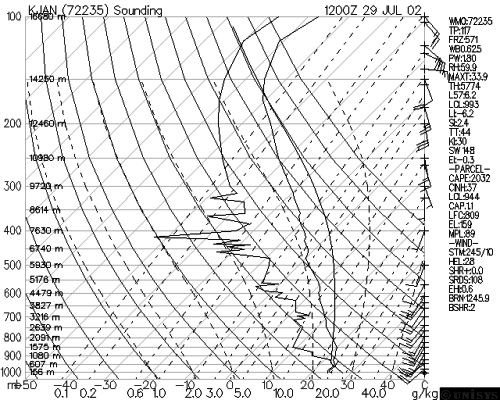 |